Alumni Spotlight: Hans Jacob Orning

In 2017/18, Orning led the project ‘The Nordic "Civil Wars" in the High Middle Ages in a Comparative Perspective’ together with UiO Professor Jón Viðar Sigurðsson. This was a comparative project that drew on the expertise of scholars of different time periods and academic disciplines.
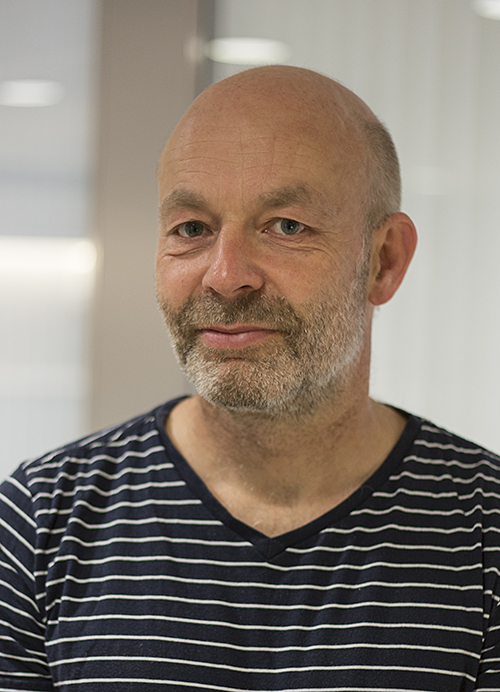
Much of what we don't like in the world today we call ‘medieval.’ But what if the Middle Ages are exactly what we need to understand ourselves and the problems the world faces today? This summer, you may have heard Orning in the podcast series Norgeshistorie on the Norwegian public broadcaster NRK. The series shattered the myth of the Middle Ages as dark, uncivilised and devoid of knowledge.
We spoke with the professor about his time at CAS and his love for the Middle Ages.
During your stay at CAS in 2017/18 you led the project ‘The Nordic “Civil Wars” in the High Middle Ages in a Comparative Perspective’ together with your colleague Jón Viðar Sigurðsson. Why did you decide to apply for a year at CAS?
Deciding to apply at CAS was not a difficult decision. This scholarship offers a rare opportunity to work very concentratedly for one year on one project. The short time frame as compared to most other projects can be viewed as a challenge, as it demands efficient organisation and starting up. But it also contributes to more focus, not least since one gets the opportunity to work from another place than one’s regular office, together with a handpicked group of scholars. Jon Vidar and I obtained the CAS fellowship simultaneously as we were granted a project by the Research Council of Norway, so in that way, we got the best of both worlds. But for my own sake, I would say a one-year concentrated stay at CAS is in many ways more productive than leading a larger and longer project.
How did you end up becoming a medieval historian? What makes the Middle Ages so interesting?
Like many students of my generation, Asterix and Grimberg were the formative impetuses for venturing into older history. And as historical studies in the 1980s and -90s were still very much nationally confined in thematic scope, antiquity had to yield to the Middle Ages. When I was a student, there were six-seven medieval historians at UiO, more than today, and definitely more than the single medieval historian in the office circa 15 years ago. When I was a student, medieval studies were still important as providing the backbone of national identity. However, I chose the period much more because it was so fascinating in its alterity. I still have an ongoing romance with the Middle Ages, which blossoms every time I enter a medieval church or castle. Maybe it’s the period’s ambiguity – being both alien and known, that fascinates me, as it fascinates millions of young people watching Game of Thrones, Vikings, etc.
In what way, if any, did the year at CAS affect your research career, and how has the research project evolved after the year at CAS?
The CAS year allowed Jon Vidar and me to devote all our energies into exploring one theme – medieval civil wars in a comparative perspective. Working on one theme without interruption is very rare in today’s academic world, where we are entrepreneurs more than academics in the old sense of the word. Just being in the wonderful localities of CAS gives inspiration, and not little awe. Also, being taken care of by the staff there is such a treat – one feels a bit like kings and queens. For us, it allowed us to work closely with colleagues from other institutions and countries, scholars from other disciplines like political science, anthropology and law, as well as involving our Ph.D’s in the process. I would say the gains have been twofold. The numerous formal and informal discussions and the concentrated research I did during the year at CAS gave a veritable kick to the depth of my understanding of our theme. The results of these developments on the other hand have surfaced during a much longer time-span. We have published two anthologies from the CAS-stay, the ones we had “promised.” But for my own part, CAS sparked the co-writing of a book on War without State – wars in the Middle Ages and today together with political scientist Øyvind Østerud, an English monograph on civil wars in print, and a popular book on civil wars in Norwegian. Thus, the «ketchup-effect” from a CAS-stay can last for many years!
What advice would you give to future CAS project leaders?
Scholarly, find a project you are passionate about and that you are sure you will commit yourself to wholeheartedly. Practically, find a core group of people you know you will work well with and who are motivated to commit themselves to the project. Getting people to clean their desk before starting and be willing to finish projects after the CAS-period is vital to its implementation. Some ‘big names’ are good not only for strategic reasons, but also because they can inspire. Most of all: enjoy the time, and know that it will be one of the most intense periods of your life!