Changing Family Patterns in Norway and other Industrialized Countries
Changing Family Patterns in Norway and other Industrialized Countries
Determinants, Consequences and Projected Trends
Principal investigators

Abstract
Industrialized countries have seen very marked changes in their family patterns during the last few decades. The development has been driven by, and may further stimulate, societal changes that most people welcome, such as improvements in economic opportunities and growth in individual freedom for both men and women. However, it is also possible that there are some negative side effects. The intention of this project is to address various family issues that are relevant for Norway as well as other industrialized countries. These two sub-projects will draw on the exceptionally rich Norwegian register data, which will be analysed by means of modern multi-process and multi-level statistical techniques. Survey data will also be employed. In addition, survey and register data from other countries will be used in order to place the development in Norway within an international perspective. The Nordic countries have to some extent been forerunners in the family development, especially with respect to the growth in consensual unions and out-of-wedlock fertility. Therefore, an improved understanding of contemporary behaviour in those societies should attract wide interest. In addition, such insight will contribute to the general knowledge of fertility and family processes. Knowledge of determinants and consequences of family changes will be particularly useful for policy and planning purposes if there are also good tools for projection of trends into the future. The objective of the third sub-project is to improve the models used to project family behaviour. Special emphasis will be placed on the construction of stochastic projection models that can include family characteristics. The existing versions only include age and sex. Special problems arise in such projections because they involve couples, not only individuals.
Fellows

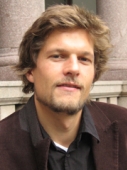
Hans Henrik Bull
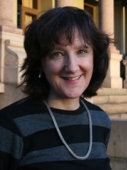
Emily Marjatta Dorothea Grundy
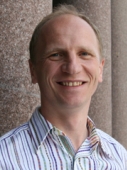



Vegard Fykse Skirbekk
Laurent Toulemon